
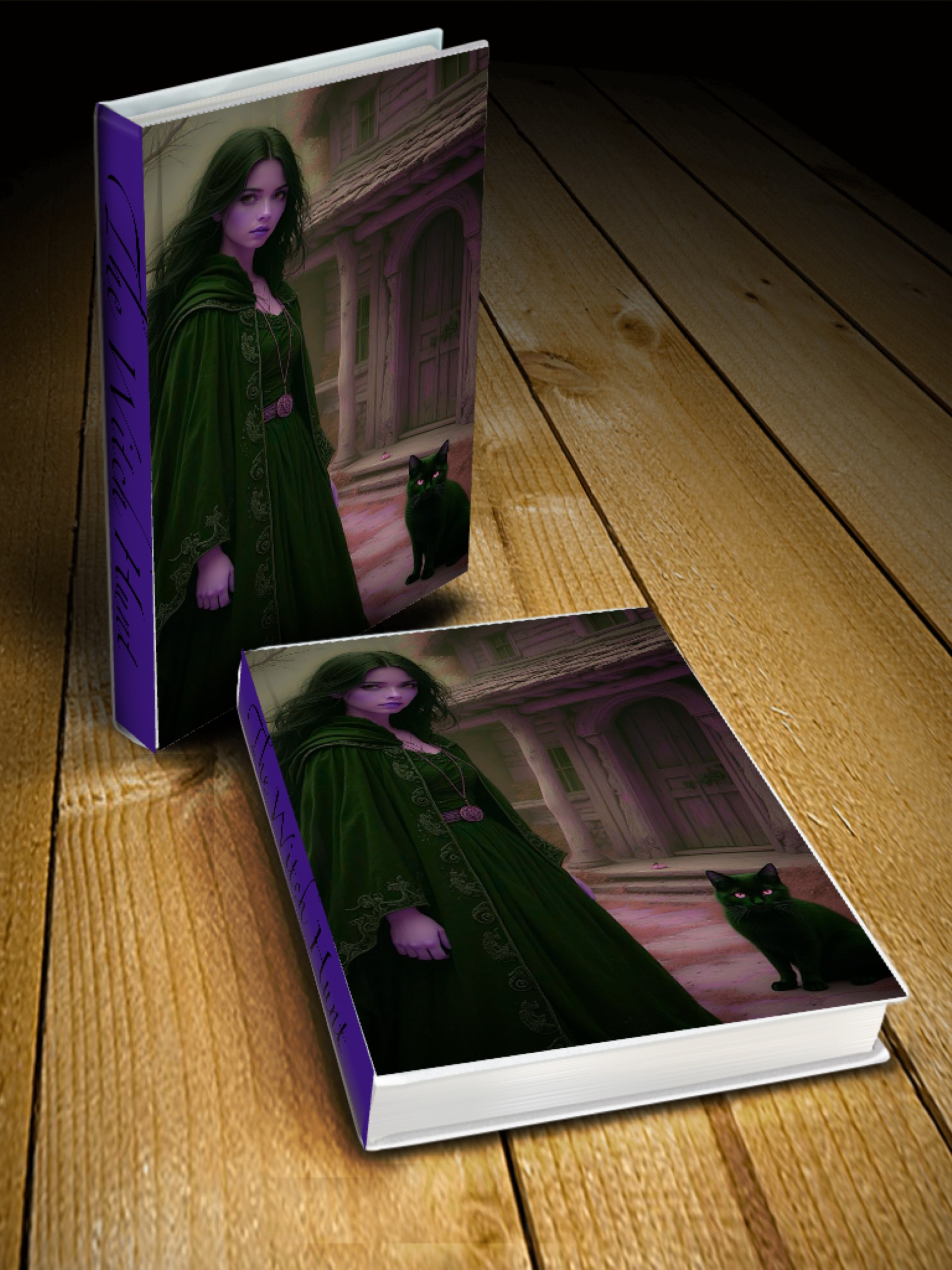

The Witch Hunt
The year was 1675. Thick and suffocating fear clung to the cobbled streets of Clitheroe, Lancashire. It had festered for weeks, fuelled by whispers and half-truths, all directed at one figure: Ereliva.
Ereliva lived a solitary life in a small cottage in Clitheroe Castle’s shadow. She dressed in black, her clothes as dark as the rumours that swirled around her like a malevolent fog. Her only companion was a sleek, black cat familiar in her presence. The townsfolk eyed her with suspicion and unease. Her knowledge of herbs and remedies, her preference for the quiet solitude of the woods, and her very appearance were all interpreted as signs of dark magic.
The witch hunt began subtly, with suspicious glances and pointed silences. Then came the accusations, whispered at first, then roared aloud in the town square. She was accused of blighting crops, souring milk, and causing misfortune to fall upon the unsuspecting. Gripped by paranoia, the town decided she was a witch, a devil servant. Ereliva had to leave.
But leaving wasn’t enough. Fear had consumed their reason. Driven by a frenzy of religious fervour and primal fear, they dragged her to the river. Her protests, her pleas for mercy, were drowned out by the baying mob. They bound her hands and feet and, with a final, triumphant roar, threw her into the cold, unforgiving water. Ereliva drowned that day, an innocent victim of blind hysteria.
With Ereliva gone, an unsettling silence settled over Clitheroe. The cheers and self-righteous pronouncements faded, leaving a lingering guilt and unease. Nobody dared venture near her old cottage. The air around it seemed tainted, heavy with the memory of injustice.
Time passed, turning months into years and years into decades. The events of 1675 became a whispered legend, a dark stain on Clitheroe’s history. Stories began to circulate – whispers in taverns and hushed conversations by the hearth – of strange happenings at Ereliva’s cottage.
It was said that her spirit, unable to find peace, returned to the only home she had ever known. The black cat, now a spectral shadow, was often glimpsed prowling through the overgrown garden. Those brave or foolish enough to approach the cottage in the dead of night told tales of flickering lights in the windows, even though it was long abandoned.
One young apprentice, Thomas, drunk on ale and bravado, boasted he would spend a night in the cottage. He snuck out under the cover of darkness, a rusty lantern his only companion. He pushed open the creaking door, the scent of dust and decay assaulting his nostrils. Inside, the air was icy cold, colder than the November night.
He settled down near the cold hearth, the flickering lamplight casting dancing shadows on the walls. He tried to tell himself it was fear playing tricks on him, but he couldn’t shake the feeling of being watched. A scratching sound, low and guttural, echoed from the corner. He held his breath, his heart hammering against his ribs. The scratching stopped.
Then, a gust of wind slammed the door shut, plunging him into darkness. He fumbled for his tinderbox, his hands shaking so violently he could barely strike a spark. Just as he managed to relight the lantern, he saw it.
A shimmering, translucent figure stood before him. It was a woman dressed in black, her face pale and sorrowful. Her eyes, dark pools of grief, locked onto his. Terrified, Thomas scrambled back, knocking over the lantern. The cottage was plunged into darkness once more.
He heard a low, mournful wail, a sound that seemed to seep into his very bones. He didn’t wait to see anything else. He stumbled out of the cottage, tripping and falling in his haste, and ran back to Clitheroe, his blood turning to ice.
Thomas never spoke of what he saw that night. But he was a changed man. He became quiet and withdrawn, haunted by the memory of Ereliva’s sorrowful face. He never went near the cottage again.
And so, the legend of Ereliva persisted. The cottage remained abandoned, a silent testament to the injustice of the past. The wind still howled through its broken windows, carrying the whispers of a wronged woman, forever bound to the place where fear took root and innocence was lost. And in the dead of night, strange things still happened there, a chilling reminder that some wrongs can never truly be righted, and some spirits can never indeed find peace.
Thank You for Read
Deborah C. Langley




Leave a Reply