
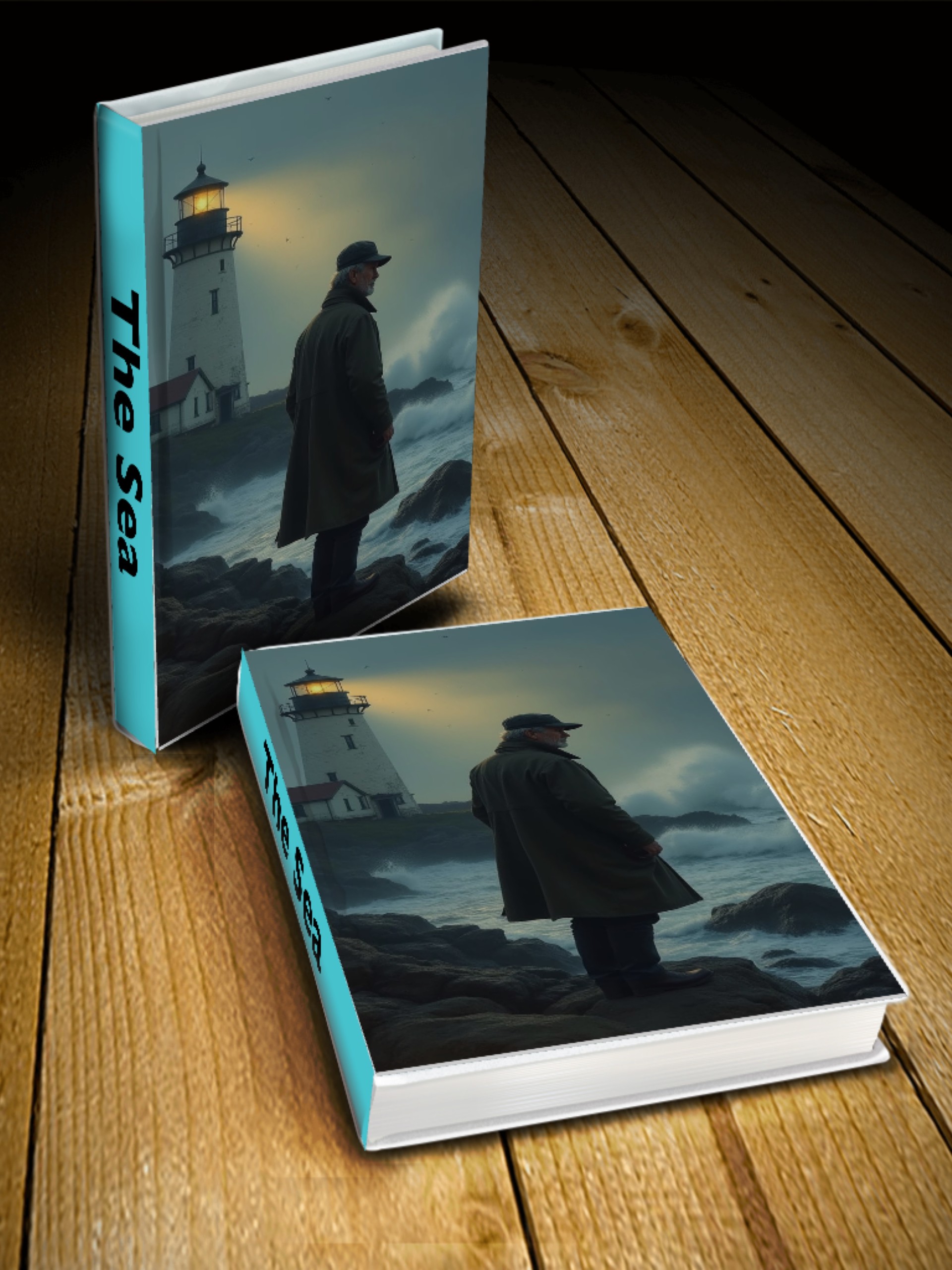

The Sea
The ceaseless wail of the wind was Brad’s constant companion, a mournful symphony that underscored the vast, indifferent expanse of the sea. Brad, lighthouse keeper of the desolate Blackwood Point, began his daily rounds precisely at 5:00 AM, a ritual unchanged for fifteen years. This cold winter morning was particularly brutal. The sky was an unforgiving slate grey, bruised with the threat of more snow, and the waves below crashed against the jagged rocks with a primal, suffocating roar. The spray, icy and stinging, climbed high, dusting the ancient stone of the lighthouse with a fine, salty glaze.
He stood by the lantern room, checking the light’s steady, reassuring sweep across the churning waters, then descended the spiral stairs, his gaze drifting out the narrow windows that offered glimpses of the furious ocean. It was then, amidst the white foam and dark, slick granite, that he saw it. A splash of defiant colour against the monochrome fury: a vivid red, impossibly bright.
His heart gave an involuntary lurch. It was too large to be debris, too distinct to be merely flotsam. A growing dread settled in his gut as he hurried his descent, his boots thudding rhythmically on the worn steps. Reaching the ground floor, he wrestled with the heavy, barnacle-encrusted door, letting in a gust of frigid air that snatched his breath.
He navigated the treacherous rocks, each step carefully placed, the wind tearing at his thick wool coat. The red grew clearer, sharper. It was a dress. A red silk dress, clinging to a form that lay face down, half-submerged in a rock pool. Long, blond hair, matted with seawater and tangled with strands of seaweed, spilled across the unforgiving stone, obscuring her face.
Brad’s pulse hammered against his ribs. He knelt awkwardly beside her, the cold seeping into his knees through his trousers. He hesitated, a fleeting, irrational fear of what he might find, before professionalism took over. Gently, he reached out, his fingers fumbling for her wrist amidst the cold, wet silk. A faint, thready beat. There was a pulse. A fragile, defiant spark of life.
Relief and urgency warred within him. She was alive. But barely. He couldn’t leave her here; the tide was unforgiving, the cold lethal. With a grunt, Brad carefully shifted her, cradling her head as he turned her onto her back. Her face, pale and ashen, was marred by angry red cuts, some still seeping. Her lips were blue. She was slighter than he’d imagined, almost weightless in his arms, yet carrying her back up the slippery incline to the lighthouse felt like lifting a lead weight. Every step was a battle against the elements and the sheer physical strain.
Finally, he stumbled through the lighthouse door, breathing heavily, and gently carried her upstairs to his small, spartan living quarters. His bed, a narrow cot usually neatly made, was the only place. He laid her down, the red silk a stark contrast against his coarse wool blankets. Her hair, still dripping, formed a halo around her head. He pulled a thick, scratchy blanket over her, tucking it tightly around her to ward off the encroaching chill.
Then, moving with a newfound sense of purpose, Brad lit the small stove in his kitchen, its warmth slowly beginning to chase away the dampness. He measured out dried vegetables and a broth cube, the familiar scent of simmering soup soon filling the air. He would need to be ready when she stirred. He poured hot water into a basin and found clean cloths.
She seemed to sleep for a long, anxious time, a deep, unnerving stillness that made Brad check her pulse several times, each time breathing out a silent sigh of relief when he found it. He sat beside her, watching the shallow rise and fall of her chest. The cuts on her face looked worse now, particularly a deep gash across her cheekbone. And then, he noticed it – her left ankle was twisted at an unnatural angle, swollen and already beginning to bruise. A broken ankle.
Brad, a man of practical skills honed by years of isolation and self-reliance, moved to action. He boiled water to sterilize a needle and thread, then carefully cleaned the cuts on her face with warm, salted water. He worked with a surprising gentleness, his large, calloused fingers light as feathers as he dabbed away the blood and grime. The gash on her cheek was deep enough to warrant a few stitches, which he administered with steady hands, drawing on forgotten memories of a first aid manual he’d once seen. For her ankle, he found two sturdy pieces of driftwood he used to prop open windows, wrapping them carefully in strips of clean linen torn from an old shirt. He fashioned a makeshift splint, immobilizing the limb as best he could, grimacing at the faint whimper she let out in her sleep.
He continued his vigil as the soup simmered, the lighthouse lamp outside casting its rhythmic beam through the small window, illuminating the unknown woman curled fragilely in his bed. Who was she? Where had she come from? The questions hung heavy in the quiet air, a stark counterpoint to the raging storm outside. He was alone, as always, but now, he was not alone. And for the first time in years, the vast silence of Blackwood Point felt less like an empty void and more like a space waiting to be filled.
Thank You for Reading
Deborah C. Langley




Leave a Reply